Where traditional finance and digital assets increasingly intersect.
The global digital asset market is entering a structural transition phase. As regulatory frameworks mature, differences in capital treatment between regulated banks and non-bank platforms are beginning to shape how liquidity, credit, and market access are organized. At the center of this shift is the Basel Committee on Banking Supervision’s cryptoasset standard, alongside its regional implementations across the United States, Europe, the United Kingdom, and parts of Asia.
Rather than eliminating digital asset activity from traditional finance, these rules are creating a two-tier market structure. In this environment, banks and non-bank entities operate under materially different constraints when engaging in crypto asset management, digital asset portfolio management, and broader digital asset investment activity.
Understanding this divergence is becoming essential for institutions navigating the digital asset market over the next several years.
Content
The Basel Cryptoasset Standard: A Structural Divider
The Basel Committee finalized its prudential framework for banks’ cryptoasset exposures in 2022, with implementation timelines extending through 2025 and 2026, depending on jurisdiction. The framework categorizes cryptoassets into two broad groups:
Group 1: Tokenized traditional assets and certain stablecoins that meet strict criteria for redemption rights, governance, and risk management.
Group 2: Unbacked cryptoassets and stablecoins that fail to meet Group 1 requirements.
Group 2 assets attract a conservative capital treatment, including a 1,250% risk weight under standardized approaches. This effectively requires banks to hold capital equivalent to the full value of their exposure, significantly limiting balance-sheet participation.
By contrast, non-bank platforms, such as trading venues, custodians, and lending entities that fall outside banking prudential frameworks, are not subject to Basel capital rules. This divergence does not eliminate risk; it reallocates where risk can be held and intermediated.
For regulated banks, the Basel framework incentivizes a selective approach to digital assets. Most bank activity is concentrated in areas that qualify as Group 1 or fall outside direct balance-sheet exposure, including:
Tokenized deposits and tokenized money-market instruments
Custody and safekeeping services
Agency execution and settlement services
Infrastructure participation (wallets, identity, messaging, and compliance layers)
Direct exposure to unbacked cryptoassets remains limited due to capital efficiency considerations. Instead, banks are focusing on enabling client access while minimizing principal risk. This approach aligns with supervisory expectations in major jurisdictions, including guidance issued by the Basel Committee, the European Banking Authority, and national regulators implementing the standard.
As a result, banks’ role in digital asset portfolio management is increasingly operational rather than balance-sheet driven.
Physical metaphors often used to represent digital asset value.
Non-Banks: Flexibility and Expanded Risk Appetite
Non-bank entities operate with greater flexibility but also with different risk profiles. Without Basel capital constraints, these platforms can:
Hold and intermediate unbacked cryptoassets directly
Operate liquidity pools with fewer capital buffers
Offer yield-bearing or leveraged structures, subject to local regulation
Aggregate global liquidity across jurisdictions
This flexibility has allowed non-banks to dominate trading volumes, decentralized liquidity venues, and certain credit-like structures. However, it also exposes them to higher volatility, funding risk, and regulatory uncertainty as regional oversight frameworks evolve.
The result is a bifurcated market in which banks provide regulated access and infrastructure, while non-banks concentrate risk and liquidity.
Regulatory Arbitrage or Structural Segmentation?
The divergence between bank and non-bank participation is often described as regulatory arbitrage. In practice, it is closer to structural segmentation.
Banks are not “opting out” of digital assets; they are participating within a framework designed to preserve systemic stability. Non-banks are not necessarily exploiting loopholes; they are operating under regimes that were not designed with bank-like balance-sheet protections in mind.
Over time, this segmentation is likely to become more explicit rather than converging. Regulatory bodies have shown limited appetite for easing bank capital requirements on unbacked cryptoassets, while simultaneously increasing oversight of non-bank entities through licensing, disclosure, and conduct rules.
Implications for Liquidity Pools
One of the clearest impacts of this two-tier system is on liquidity formation. Bank-linked liquidity is increasingly concentrated in:
Tokenized cash and deposit instruments
Stablecoin settlement rails with clear redemption frameworks
Permissioned trading venues with defined counterparty controls
Non-bank liquidity pools, by contrast, continue to dominate unbacked cryptoasset markets and decentralized venues.
This separation may reduce commingling between regulated and unregulated liquidity, leading to more distinct pricing dynamics, spreads, and volatility regimes across market segments.
Credit Formation and Market Structure
Credit formation is also evolving under these constraints. Banks are cautious about extending credit against unbacked crypto collateral due to capital treatment and supervisory scrutiny. Instead, credit exposure is increasingly indirect, structured through:
Secured lending against tokenized traditional assets
Repo-like arrangements using tokenized cash equivalents
Agency facilitation rather than principal lending
Non-bank platforms remain more active in crypto-native credit structures, though these activities face growing regulatory attention in multiple jurisdictions.
Over the next five years, this may result in parallel credit markets, one regulated and balance-sheet constrained, the other more flexible but subject to higher operational and regulatory risk.
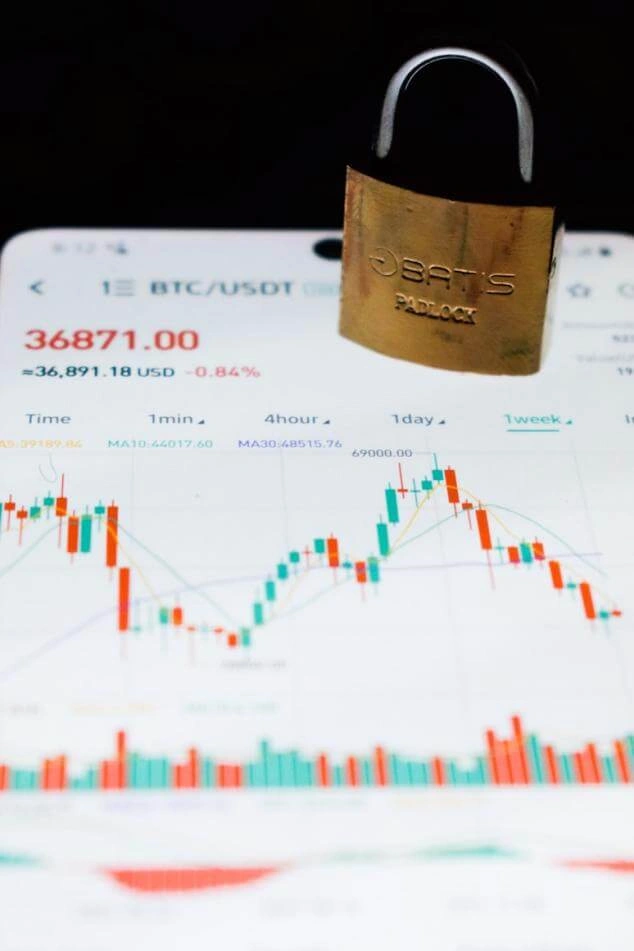
Security and access control remain foundational to institutional digital asset infrastructure.
Partnership Models: Banks and Non-Banks Converge Operationally
Rather than competing directly, banks and non-banks are increasingly forming partnership models. Banks contribute regulated infrastructure, compliance controls, and access to traditional financial systems. Non-banks contribute technology, liquidity aggregation, and market reach.
These partnerships are already visible in custody arrangements, settlement networks, and distribution platforms. For institutions navigating the digital asset market, understanding these hybrid structures is becoming as important as understanding individual asset classes.
What This Means for Institutional Strategy
For institutions engaged in digital asset investment and crypto asset management, the two-tier market structure reinforces the need for clarity around exposure, counterparties, and operational dependencies.
Key strategic considerations include:
Where liquidity is sourced and how it is governed
How capital treatment affects product design
Which activities sit on the balance sheet versus agency models
How regulatory changes may alter non-bank participation over time
Digital asset portfolio management is no longer just about asset selection; it is increasingly about infrastructure, regulation, and market structure.
Looking Ahead
As Basel implementation timelines converge with regional digital asset frameworks, the distinction between bank-led and non-bank-led markets is likely to sharpen rather than fade. This does not signal fragmentation; it reflects the maturation of digital asset markets into differentiated institutional layers.
Understanding this evolution is essential for participants seeking to engage responsibly and sustainably in the next phase of digital market development.
Digital assets are increasingly viewed through a portfolio and infrastructure lens.
Learn More with Kenson Investments
For institutions seeking deeper insight into crypto capital rules, regulatory market structure, and institutional digital asset infrastructure, Kenson Investments provides research-driven educational resources designed to support informed decision-making. Through white papers, industry analysis, and market structure briefings, Kenson Investments helps organizations navigate the digital asset market with clarity and context, supported by blockchain and digital asset consulting and decentralized finance advisory. Connect with them today.
About the Author
The author is a contributor specializing in institutional digital asset market structure, regulatory frameworks, and financial infrastructure transformation. Their work focuses on translating complex policy and operational developments into practical insights for banks, asset managers, and financial market participants operating in evolving digital environments.
Disclaimer: The information provided on this page is for educational and informational purposes only and should not be construed as financial advice. Crypto currency assets involve inherent risks, and past performance is not indicative of future results. Always conduct thorough research and consult with a qualified financial advisor before making investment decisions.
“The crypto currency and digital asset space is an emerging asset class that has not yet been regulated by the SEC and the US Federal Government. None of the information provided by Kenson LLC should be considered as financial investment advice. Please consult your Registered Financial Advisor for guidance. Kenson LLC does not offer any products regulated by the SEC, including equities, registered securities, ETFs, stocks, bonds, or equivalents.”
Wesley has been a crypto enthusiast for a year. He’s an avid watcher of all the latest developments in the space, and enjoys predicting what will happen next with his favorite coins.
He lives in his hometown of New York City with his wife and two sons. His hobbies include watching movies, playing basketball, and reading about how to survive disasters that may occur from climate change or an asteroid impact!